Nuo Opera
Introduction
Nuo Opera, an ancient form of Chinese folk drama, is a cultural gem recognized as a national intangible cultural heritage. It is traditionally performed during festivals and other significant events as a way to ward off evil spirits and pray for good fortune. The performers, known for their vibrant masks, engage in ceremonial dances and storytelling, which are deeply rooted in ancient sacrificial rituals. Originating from various regions across China, such as Hubei, Hunan, Jiangxi and Guizhou, Nuo Opera showcases a rich tapestry of regional variations and styles, reflecting the diverse cultural landscapes of these areas.
Origins
The origins of Nuo Opera can be traced back to ancient China, specifically from sacrificial ceremonies intended to drive away plagues and diseases. It is believed to have existed since the Shang Dynasty (c.16th century-11th century BC), evolving over centuries into a distinctive operatic form.
These performances were initially conducted as rituals to appease deities and protect communities from misfortunes. The opera's historical significance is underscored by its role in religious practices, where it served as a medium to communicate with the divine and ensure communal well-being.
Characteristics
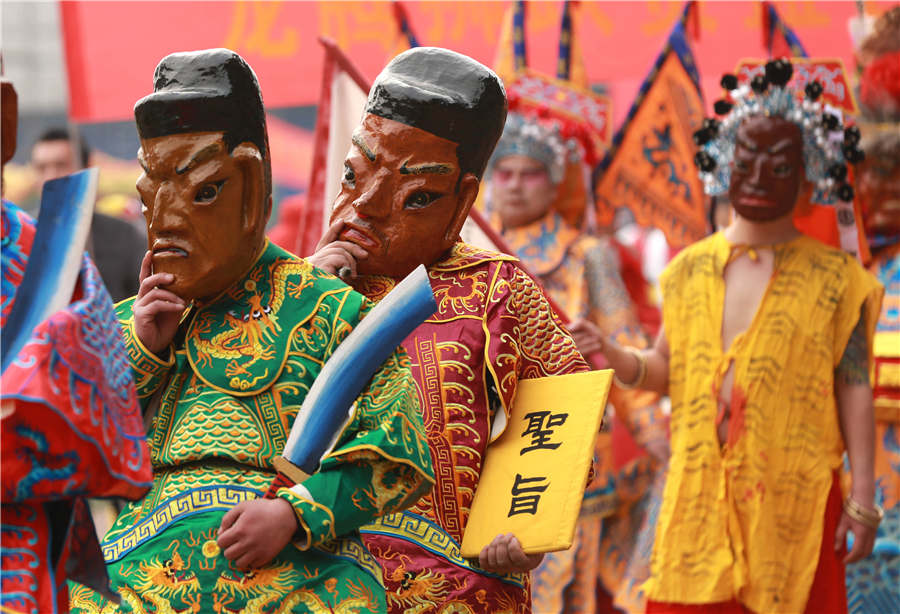
Nuo Opera is characterized by its dynamic and theatrical performance style, which combines dance, music and drama. The choreography often includes acrobatic movements and symbolic gestures that convey complex narratives and emotions. Performers don elaborate masks and costumes, embodying different characters, deities or spirits. The opera traditionally begins with a ritualistic invocation, followed by a series of narrative-driven acts that entertain and educate the audience.
The masks and costumes of Nuo Opera are integral to its aesthetic and cultural expression. Traditionally handcrafted, the masks are made from wood and painted with vibrant colors. Each mask represents a specific character or spirit, with distinct facial features that denote their role in the narrative. The craftsmanship of these masks is a respected art form, with techniques passed down through generations. Performers' costumes are equally elaborate, often featuring intricate designs that reflect regional cultural motifs and the thematic essence of the opera.
Cultural Significance
Nuo Opera plays a significant role in various traditional Chinese festivals, serving as a communal activity that brings people together in celebration and prayer. It is commonly performed during occasions such as the Lantern Festival, where it acts as a spiritual and cultural highlight. The performances are believed to invoke blessings for prosperity, health and peace, making them an essential part of community life.
Preservation Efforts
In recent years, significant efforts have been made to preserve and revitalize Nuo Opera as part of China's cultural heritage. Enthusiasts and practitioners have dedicated their lives to maintaining this tradition, forming troupes and organizing performances both domestically and internationally.
Local governments and cultural institutions have provided support through funding and recognition, such as listing Nuo Opera as a national intangible cultural heritage. These preservation efforts often include educational programs, workshops and the establishment of cultural centers to ensure that the skills and knowledge of Nuo Opera are passed on to future generations.








